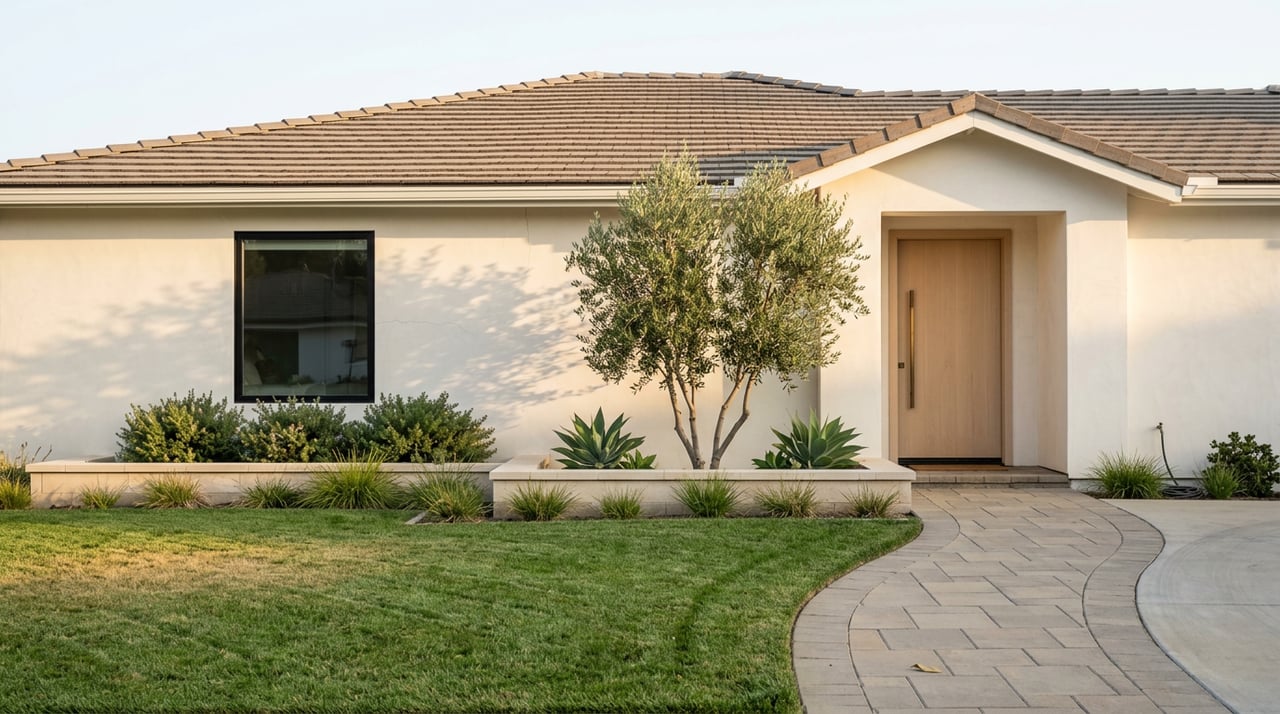
Carlsbad Property Taxes: How Mello-Roos Varies by Neighborhood
August 21, 2026
August 21, 2026
The number usually shows up on page four of the preliminary title report, or buried in a disclosure packet a buyer skims the night before signing. A line labeled Community Facilities District, sometimes shortened to CFD, sometimes still called by its 1980s name, Mello-Roos. It sits below the base property tax, and it is the reason two homes in Carlsbad priced within a few thousand dollars of each other can carry annual tax bills that differ.
Buyers comparing a resale in Olde Carlsbad to a newer build in Bressi Ranch or La Costa Greens tend to assume the price tag is the whole conversation. It isn't. ActiveRain reports that many of Carlsbad's newer master-planned communities carry Mello-Roos. The special tax funded the roads, parks, and school sites inside those communities, and it does not show up in the number most people quote as the price of the house.
The newest neighborhood in Carlsbad is rarely the newest bill. Usually it is two bills, one of them running on its own schedule.
The mechanism starts in 1978. Proposition 13 capped California's general property tax at 1 percent of assessed value and limited annual increases to 2 percent, which protected homeowners from runaway tax bills but also cut off the revenue cities had been using to build infrastructure for new subdivisions. By 1982, the state answered with the Mello-Roos Community Facilities Act, which let cities, counties, and school districts form a Community Facilities District, issue tax-exempt bonds against it, and repay those bonds through a special tax levied only on the properties inside that district's boundary.
That is the whole trick. The tax is not spread across every Carlsbad property owner. It is charged only to properties inside the specific district. In bonded districts, it pays down the bond; other districts use non-bonded, pay-as-you-go arrangements. Older neighborhoods built before 1982, or built without needing new roads and sewer lines, generally never formed a district and never carry the charge. Newer master plans built the district into the deal from day one.
For any single address, the real answer lives on the parcel's tax bill, not the zip code.
Zip Code | Representative Areas | Typical CFD Status | What It Generally Funded |
|---|---|---|---|
92008 | The Village, Olde Carlsbad, the Barrio | Verify by parcel | Pre-1980s infrastructure, already tax-funded |
92009 | Old La Costa, La Costa Valley, La Costa Greens, La Costa Ridge, La Costa Oaks | Verify by parcel | Roads, parks, and school sites for the newer La Costa tracts |
92010 | Bressi Ranch, Calavera Hills, Robertson Ranch, The Foothills at Carlsbad | Common in newer tracts | Trail networks, community parks, shopping-adjacent infrastructure |
92011 | Aviara | Verify by parcel | Golf-adjacent master plan infrastructure, HOA-governed common areas |
The contrast inside a single zip code is often the more useful lesson than the zip code itself. Old La Costa is the established custom-home pocket of 92009. For La Costa Greens and La Costa Ridge, check the parcel's bill rather than relying on a zip code or community name.
Rancho Carrillo adds its own wrinkle worth flagging for anyone shopping strictly by zip code. It carries a Carlsbad mailing address but is generally served by San Marcos Unified rather than Carlsbad Unified, a detail that has nothing to do with Mello-Roos but everything to do with why a parcel-level check matters more than a zip code assumption, whether the question is taxes or school assignment.
Carlsbad's own finance department publishes the district-by-district detail, and it is worth reading before assuming every CFD line is identical. CFD No. 1 is a citywide, non-bonded, pay-as-you-go special tax that was recorded against select vacant properties back on May 20, 1991, collected either at building permit issuance or amortized over 25 years at the property owner's request. CFD No. 3 Improvement Area 2 is a bonded district with debt service payments scheduled from 2008 through 2038, according to the city's Community Facilities Districts page.
That detail matters because the payment schedule depends on the district's arrangement.
Here is where the gap stops being abstract. JVM Lending gives buyers researching Carlsbad in 2026 a working range: effective property tax rates in areas without a Community Facilities District generally land between 1.1 and 1.3 percent of value, while CFD-heavy zip codes can push the effective combined rate to 1.5 to 1.7 percent once the special tax is added to the base 1 percent levy.
Applied to Carlsbad's citywide median price, which sat around $1.5 million as of mid-2026, the difference between the low end of that range and the high end works out to roughly $9,000 a year, or somewhere in the neighborhood of $750 a month. That is not a rounding error against a mortgage payment. It is closer to the size of a car payment, and it rarely appears in the number a buyer mentally files as the cost of the house.
The 2026 tax year adds one more layer worth a mention rather than a full answer. The federal SALT cap was raised to $40,000 for 2026, up from the longstanding $10,000 limit, which changes the math on whether a Mello-Roos payment is meaningfully deductible for a given household. Whether that applies to any specific buyer's return depends on their full state and local tax picture, and that question belongs to a tax professional, not a real estate blog.
None of this means the newer, amenity-rich communities are a bad buy. It means the amenities were financed rather than paid for in cash at the close of escrow. The trail network connecting Bressi Ranch, the parks inside La Costa Greens, the roads and school sites built into Robertson Ranch and Calavera Hills, all of it exists because a district was formed and the infrastructure was financed through bonds or pay-as-you-go special taxes. Buyers who value that infrastructure, and who run the real monthly number before they fall in love with a floor plan, are making an informed trade rather than an accidental one.
The problem shows up when the special tax surfaces for the first time during escrow, after a buyer has already anchored on a monthly payment that didn't include it. That is the moment worth avoiding entirely.
Before writing an offer on anything in Carlsbad's newer tracts, it is worth pulling a short list of documents rather than trusting the listing sheet:
That last document is the one most buyers never ask for, and it is the one to check for whether the bill they are looking at today shrinks, holds flat, or grows, and when it ends.
Does every new neighborhood in Carlsbad carry Mello-Roos? No. Coverage varies by tract even within the same master plan, and the only reliable way to know is to check the parcel's current tax bill rather than assuming based on the community name.
Does the special tax ever go away? The terms vary by district: some are bonded, while others use non-bonded, pay-as-you-go arrangements. Some Carlsbad districts have decades left, others are closer to retirement. Check the Rate and Method of Apportionment document for the specific district's terms rather than assuming every special tax ends with a bond payoff.
Is Mello-Roos tax deductible? It depends on the household's broader tax situation, and the 2026 increase in the SALT cap changes that calculation for some buyers without making it universal. This is a question for a CPA or tax attorney, not a general answer.
Comparing Carlsbad neighborhoods on price alone leaves out the line item that quietly separates one part of the city from another. If you are weighing a home in the Village against one in Bressi Ranch or Aviara, or trying to understand what a specific La Costa tract actually costs once every line is added up, Agency West can walk through the parcel-level detail before you write an offer, not after. Book a Private Consultation and bring the address. We'll pull the number that matters.
This article is general information, not legal, tax or financial advice. Consult a qualified professional about your situation.
Stay up to date on the latest real estate trends.

In 2026, luxury homes speak to the soul. Explore how Agency West and Amy Ali guide clients toward spaces that feel as good as they look.
Storytelling is the new luxury advantage. Discover how Agency West uses narrative marketing to create emotional connection and value in high-end real estate.
In 2026, family offices are turning to real estate for legacy, not just return. Explore why California estates are becoming strategic pillars of wealth.

Explore how art, architecture, natural light, materials, and indoor-outdoor living can shape the experience of Southern California luxury homes.

Explore what to consider beyond price when buying a luxury home, from architecture and privacy to location, land, and lifestyle fit.
Our team is ready to listen, strategize, and provide the support you need for a successful journey. Let’s start a conversation, understand your vision, and work together to achieve results that exceed expectations.

Agency West
16950 Via De Santa Fe Ste 5060-168
Rancho Santa Fe CA 92067
Contact Broker-of-Record
Hilary Saunders
Corporate License No. 02014153
[email protected]